On this page
- What is hardbanding and where is it applied?
- Why do drill pipe tool joints wear out?
- How do you select a hardband alloy?
- What is the correct hardbanding welding procedure?
- Can you re-apply hardband over existing deposits?
- How does portable hardbanding compare with shop hardbanding?
- How is hardbanding inspected and accepted?
- What does skipping hardbanding actually cost?
- Which hardbanding terms cause misunderstandings?
- Key takeaways
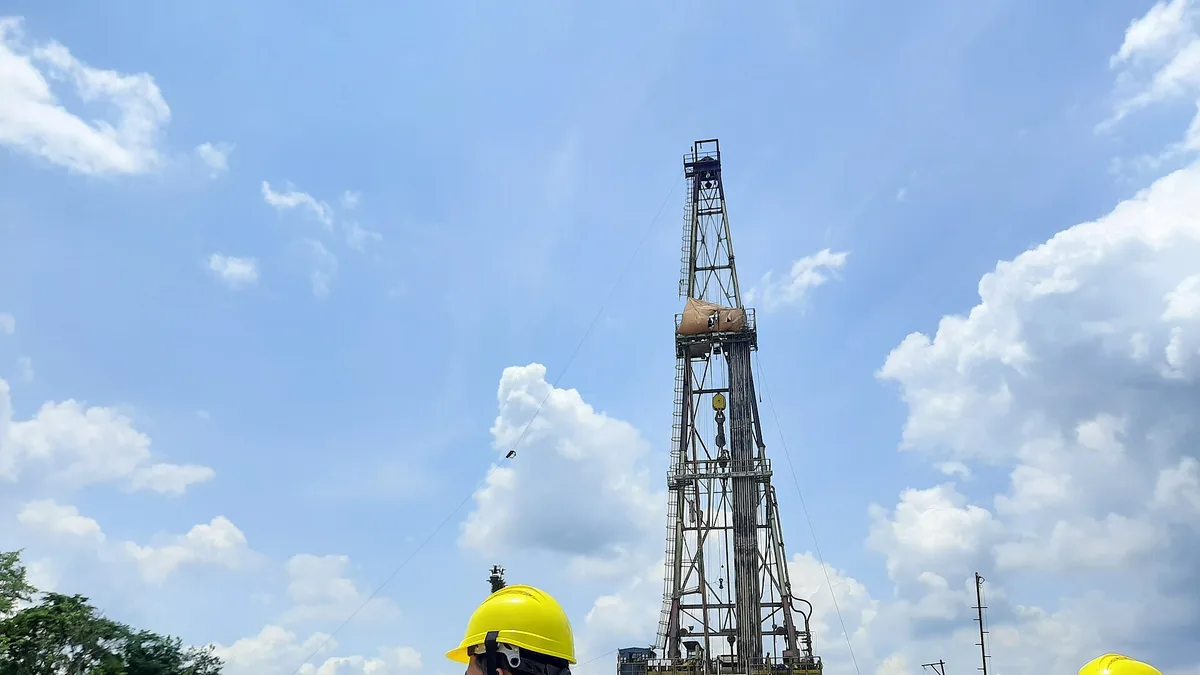

Hardbanding is the hardfacing process of depositing a wear-resistant alloy onto the outer diameter of drill pipe tool joints to protect them from abrasive downhole wear. Tool joints are the sacrificial wear points of the drill string: they contact the formation, the casing, and the borehole wall on every rotation, and without protection they wear out far faster than the pipe body itself. This guide covers the full hardbanding workflow, from understanding why tool joints wear, to selecting an alloy, to welding, inspection, and QA, and links to every specialized article on this site.
What is hardbanding and where is it applied?#
Hardbanding is the application of a band of hard weld metal, typically 50 to 75 mm wide, onto the outer diameter of a drill pipe tool joint, centered roughly at the mid-plain area. When the tool joint rubs against rock or casing, the hard band takes the wear instead of the base steel. The tool joint OD stays intact, the connection stays gauge, and the pipe stays in service longer.
A tool joint is the threaded connection at each end of a drill pipe joint. It has a larger outside diameter than the pipe body, so when the string lies against the low side of the hole (which it almost always does in directional wells), the tool joint carries the contact load. That contact, plus entrained cuttings and formation abrasives, grinds the tool joint OD away.
Three things matter about the deposit:
- Wear resistance: the alloy must resist abrasion and to some extent erosion and impact far better than the tool joint steel.
- Crack behavior: some alloys deposit crack-free, others deposit with controlled checkerboard cracking. This choice drives casing wear risk and re-application strategy.
- Application quality: hardbanding is a welding process. Preheat, interpass temperature, bead placement, and post-weld handling determine whether the band performs or fails early.
Hardbanding is also applied to other string components: drill collars, heavyweight pipe, subs, stabilizers, and jar bodies. The principles are the same throughout.
Why do drill pipe tool joints wear out?#
Tool joint wear is not one failure mode, it is several distinct mechanisms, and the dominant one should inform the alloy choice. The main wear mechanisms are abrasion by formation solids, adhesive sliding wear against casing, erosion by high-velocity mud, and impact in hard or broken formation. Side force on the tool joint depends on well trajectory, dogleg severity, string tension, and hole condition.
The mechanisms in detail:
- Abrasion: sandstone, shale with high quartz content, and unconsolidated formations act like grinding paste against the tool joint OD. This is the primary driver of hardband wear.
- Adhesive and sliding wear against casing: in cased holes and directional work, the tool joint slides against casing under high side force, wearing both surfaces.
- Erosion: high-velocity mud with entrained solids cuts away at the band, particularly on the exposed shoulder areas.
- Impact: in hard, broken formation and during percussion drilling, the band takes repeated impacts that can chip or spall marginal deposits.
The mechanics of contact deserve attention. A long lateral with high doglegs generates far more aggressive wear than a vertical well. If you want the full breakdown of failure drivers, read Why Drill Pipe Tool Joints Wear Out.
One practical point: worn tool joints do not just cost a repair. A reduced-diameter tool joint loses machine allowance for re-cutting threads, pushing the joint toward scrap. Hardbanding protects the base metal and preserves that re-cut allowance across multiple cycles.
How do you select a hardband alloy?#
Alloy selection is the decision that drives everything downstream, and it starts with a single question: will the string rub against casing that you need to protect? If casing protection matters, casing-friendly hardbands are designed to wear preferentially to the casing. If casing is not at risk, more abrasive alloys can protect the tool joint more aggressively.
Casing-friendly versus abrasive alloys#
Casing-friendly hardbands are designed to wear preferentially to the casing, keeping casing wear low while still protecting the tool joint. Abrasive hardbands protect the tool joint more aggressively but will machine away casing if the string rotates against it under load. In most modern drilling programs, especially directional and extended-reach work, casing-friendly is the default. For a detailed comparison, see Casing-Friendly vs Abrasive Hardband Alloys.
How does tungsten carbide compare with chromium carbide hardbanding?#
Tungsten carbide and chromium carbide hardbands are the two dominant chemistries, and they differ in deposit condition, abrasion resistance, casing wear risk, re-application behavior, and typical use. The comparison is summarized below.
| Property | Tungsten carbide (WC) hardband | Chromium carbide hardband |
|---|---|---|
| Typical matrix | Ni, Co, or Fe matrix with WC particles | Chromium-rich carbide in iron-based matrix |
| Deposit condition | Often crack-checkered (traditional) or crack-free (modern formulations) | Commonly crack-free or fine micro-cracked |
| Abrasion resistance | Excellent, among the best available | Very good |
| Casing wear risk | High if deposit is rough or cracked; low for polished crack-free versions | Low to moderate; generally casing-friendly |
| Re-application | Difficult over cracked old deposits | More forgiving over sound existing deposits |
| Typical use | High-abrasion sections, casing not at risk | Directional wells, cased holes, general purpose |
The comparison article Tungsten Carbide vs Chromium Carbide Hardbanding goes deeper on metallurgy and field performance. The short version: do not default to “carbide means tungsten carbide.” Modern chromium carbide and mixed-alloy crack-free products handle most duties well and are far kinder to casing.
For how the alloy microstructure actually resists abrasion, the article How Hardband Alloys Resist Abrasion Downhole covers carbide morphology, matrix hardness, and why hardness numbers alone do not predict field life.
What are the special cases in alloy selection?#
Two special cases require specific alloy choices: non-magnetic drill string components for directional drilling, and applications where a crack-free deposit is mandatory. Both are situations where the wrong alloy compromises measurement tools or creates downhole debris risk.
Non-magnetic pipe for directional drilling (MWD/LWD tool string components, monel and stainless alloys) requires non-magnetic hardband alloys. Applying a magnetic hardband to a non-magnetic environment compromises the measurement tools. See Non-Magnetic Hardbanding for Directional Drilling.
Crack-free requirements: where casing wear, spalling, or downhole debris (from a spalled band) are concerns, crack-free alloys are mandatory or strongly preferred. Our article Crack-Free Hardband Alloys: What Actually Works explains what actually delivers a crack-free deposit, because marketing claims and metallurgical reality do not always match.
What is the correct hardbanding welding procedure?#
A sound hardbanding procedure runs from pre-application inspection through preheat, bead placement, interpass control, cool-down, and post-weld inspection. Hardbanding is a welding process performed on expensive, threaded, heat-treated components. Done casually, it will ruin tool joints through heat-affected zone damage, cracking, or distortion. Done to a written procedure, it is reliable.
The procedure includes:


- Pre-application inspection: verify the tool joint OD has enough material to accept the band, check existing hardband condition if any, confirm thread condition.
- Preheat: typically in the 200 to 400 °F (roughly 95 to 205 °C) range depending on alloy and base metal, to slow cooling rates and reduce cracking. Follow the alloy manufacturer’s datasheet, not shop tradition.
- Bead placement and sequencing: the band is centered on the tool joint mid-plain with defined width and height limits. Weld sequencing must manage heat input to avoid local distortion and excessive hardness gradients.
- Interpass control: maintain interpass temperature within the specified band and control weld heat input.
- Cool-down: slow, controlled cooling, sometimes with insulation blankets, to prevent quench cracking and minimize residual stress.
- Post-weld inspection: dimensional check, visual crack check, and documentation before the pipe is released.
The full procedure article, Hardbanding Welding Procedure: Preheat to Cool-Down, covers each step with the parameters that matter and the shortcuts that cause failures.
Can you re-apply hardband over existing deposits?#
Yes, sometimes new hardband can be welded over old hardband, but only if the old deposit is sound and compatible, and only after proper removal or preparation of damaged areas. Re-application over cracked or unsound deposits risks band failure and base metal damage. The details are covered in Re-Applying Hardband Over Existing Deposits.
How does portable hardbanding compare with shop hardbanding?#
Shop hardbanding uses dedicated equipment (lathes, positioners, ovens) for high throughput and tight quality control, while portable hardbanding uses track-mounted or spin-weld units that travel to the pipe for field repairs and small batches. The trade-offs involve equipment cost, quality control, throughput, and logistics.
| Factor | Shop hardbanding | Portable hardbanding |
|---|---|---|
| Equipment cost | High (lathes, positioners, ovens) | Moderate (track-mounted or spin-weld units) |
| Quality control | Easier: controlled environment, full preheat control | Weather and site conditions affect quality |
| Throughput | High, best for full-string campaigns | Lower, best for touch-ups and small batches |
| Logistics | Pipe must travel to the shop | Machine travels to the pipe |
| Best use | New pipe, scheduled inspections, re-work | Field repairs, small spreads, urgent needs |
The comparison article Portable vs Shop Hardbanding Machines covers equipment specifics. Shops setting up or expanding hardband capability should also read Oilfield Fabrication Basics for Hardband Shops for layout, handling, and process infrastructure guidance.
How is hardbanding inspected and accepted?#
Hardbanding inspection answers three questions: is the deposit sound, is the deposit in the right place and dimension, and will it do its job downhole. Acceptance criteria should be written before the job, not negotiated in the yard. Standard inspection elements include visual crack inspection, dimensional verification, washout and undercut checks, bore and thread condition, and documentation per joint.
Standard inspection elements:
- Visual crack inspection: under adequate light and magnification where required. Distinguish acceptable crack-checkering (for crack-check alloys) from through-cracks and spalling.
- Dimensional verification: band width, height above OD, and position relative to the tool joint mid-plain. Excess height increases casing wear and snag risk.
- Washout and undercut check: look for erosion of the band and base metal beneath or beside the band, which signals band loss in service.
- Bore and thread condition: confirm the heat of welding did not distort or affect the connection.
- Documentation: alloy lot, welder, procedure, and inspection results recorded per joint.
The detailed article Hardbanding Inspection and Acceptance Criteria covers what to accept, what to rework, and what to scrap.
For daily operations, the practical companion is our Hardbanding QA Checklist: Before the Pipe Leaves, a shop-floor checklist covering everything from alloy verification to final documentation.
What does skipping hardbanding actually cost?#
The economics of hardbanding favor the process in almost every abrasive drilling program once downtime is counted, not just pipe cost. A hardband campaign costs the alloy, labor, and machine time, amortized over the extended life of the tool joints. A tool joint failure or premature string pull costs the rig rate multiplied by the hours or days lost, plus the tool joint replacement itself. Rig time dwarfs hardband cost.
Worn tool joints pull time: the string comes out early, connections fail inspection, and re-cut allowance disappears. Each of these events costs rig time. We walk through the downtime math in The Cost of Skipping Hardbanding: Downtime Math.
Cheaper is not the same as lower cost. A bad hardband job that spalls, cracks, or gouges casing can cost more than no hardbanding at all, because it adds downhole debris and casing damage to the failure bill.
Which hardbanding terms cause misunderstandings?#
Hardbanding terminology, including terms like hardfacing, crack-checkering, mid-plain, machine allowance, and casing-friendly, appears constantly in specs, quotes, and inspection reports. Mixed understanding of these terms causes real disputes between drilling contractors, inspection companies, and hardband shops. Precise working definitions keep specifications and conversations consistent.
The Hardbanding Glossary: Every Term Decoded gives you precise working definitions to keep specs and conversations consistent.
Key takeaways#
- Hardbanding is a wear-resistant weld deposit on the tool joint OD that sacrifices itself to protect the tool joint, preserving re-cut allowance and string life.
- Match the alloy to the environment: casing-friendly, crack-free alloys for directional and cased-hole work; aggressive alloys only where casing is not at risk.
- The procedure matters as much as the alloy: preheat, bead placement, interpass control, and cool-down determine whether the band survives.
- Write your acceptance criteria before the job, inspect to them, and document every joint.
- Count downtime, not pipe cost, when evaluating whether to hardband: rig time dominates the economics.
- Start with the specialized guides linked throughout this page for whichever stage of the process you are working on.
- Hardbanding
- Drill pipe tool joint
- Tungsten carbide
- Chromium carbide
- Hardfacing
- Directional drilling
- MWD/LWD